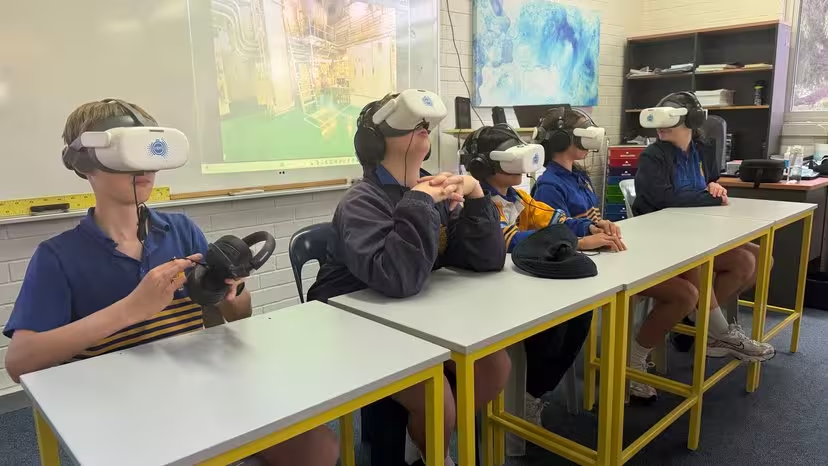

We’ve seen significantly higher engagement and far more meaningful classroom discussions after students complete VR training.

Benefits
Heading
lorem
- 01
heading
In partnership with RIST, we refined learning outcomes and translated core training content into immersive, experience-driven modules.
- 01
heading
description
We’ve seen significantly higher engagement and far more meaningful classroom discussions after students complete VR training.
Lorem ipsum dolor sit amet, consectetur adipiscing elit. Suspendisse varius enim in eros elementum tristique. Duis cursus, mi quis viverra ornare, eros dolor interdum nulla, ut commodo diam libero vitae erat. Aenean faucibus nibh et justo cursus id rutrum lorem imperdiet. Nunc ut sem vitae risus tristique posuere.
Introduction
Part of the problem is that under-resourced clinical teams rarely get the chance to understand what delirium feels like from the inside, while the University of Technology, Sydney (UTS) estimates that around 4,000 older Australians experience delirium on any given day in hospital.
Solution
Delirium VR was developed in partnership with the University of Technology, Sydney, and powered by Oncio, Start Beyond’s immersive learning platform. The VR experience forms part of a research project run by Dr. Amy Montgomery and her team at UTS which looks to enable clinicians to provide better support and more effective care to patients experiencing delirium.
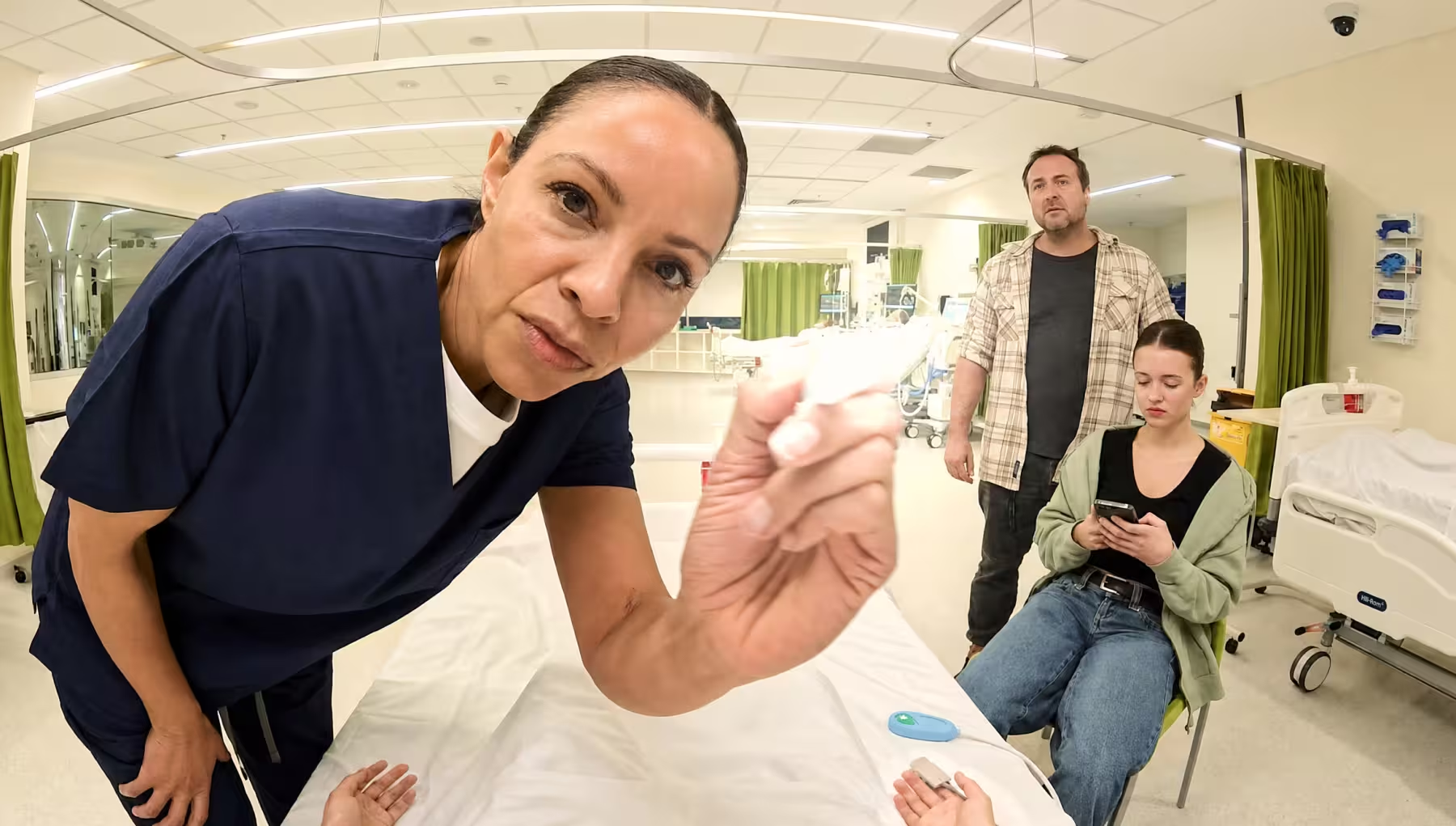
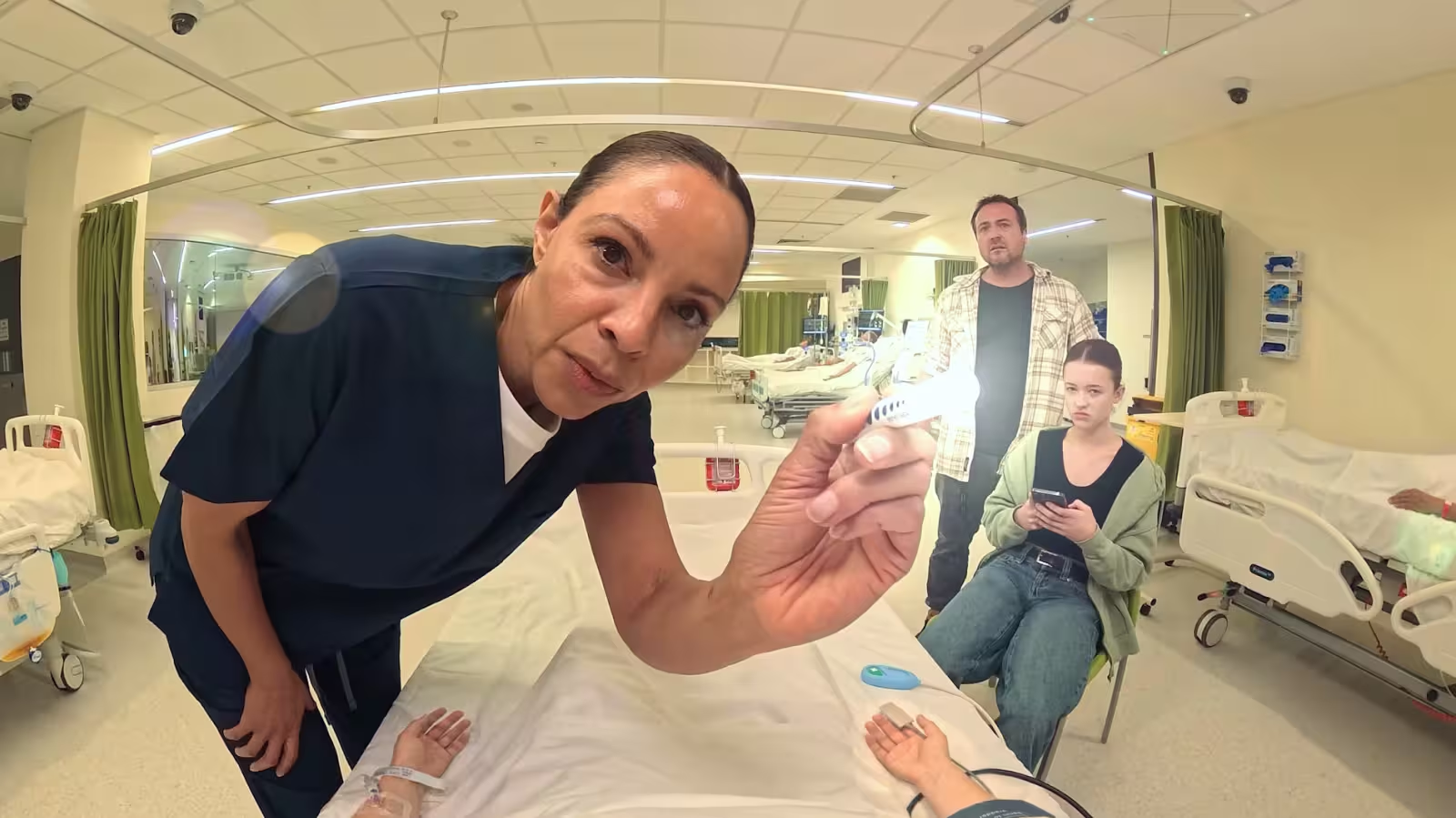
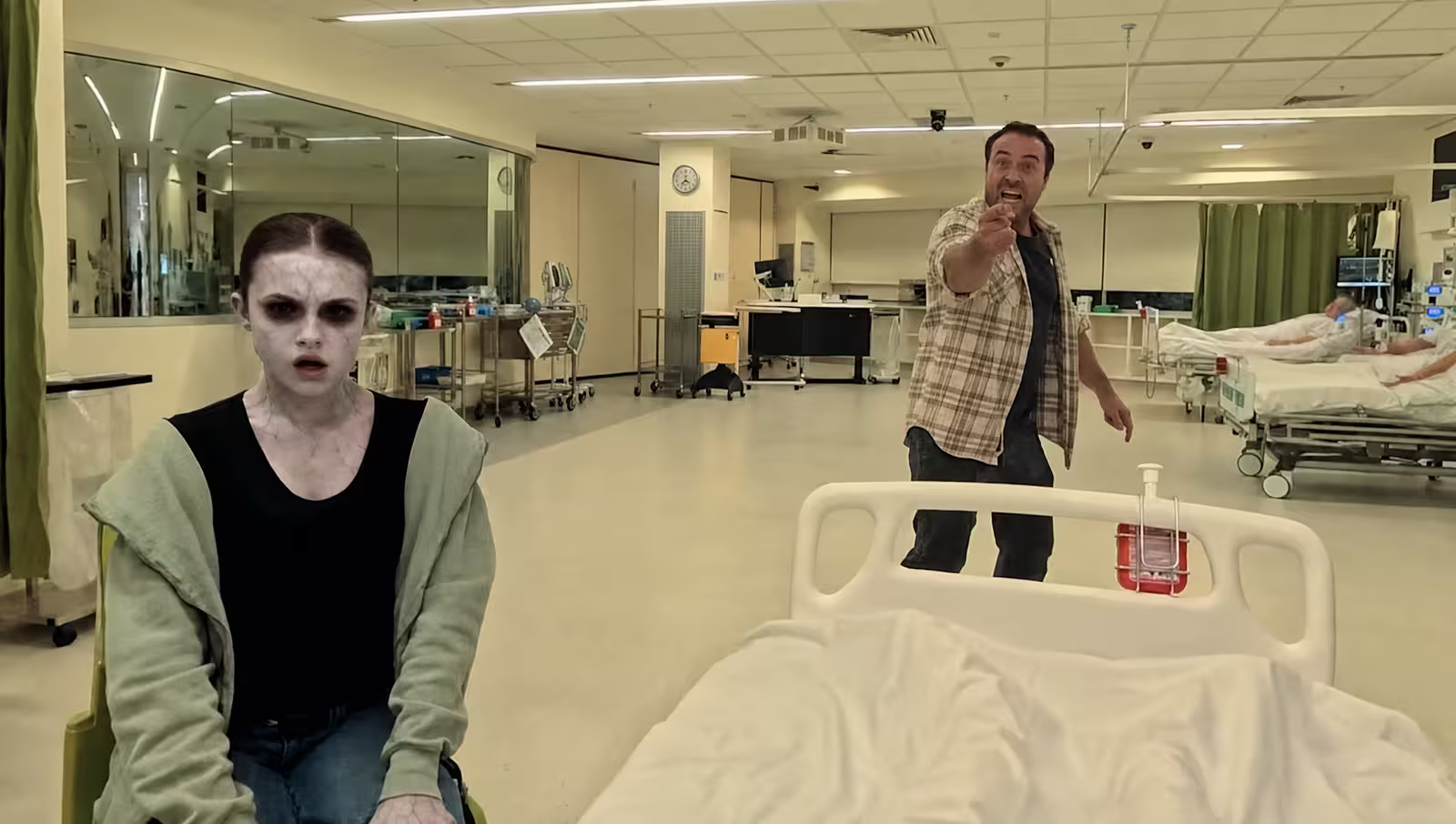
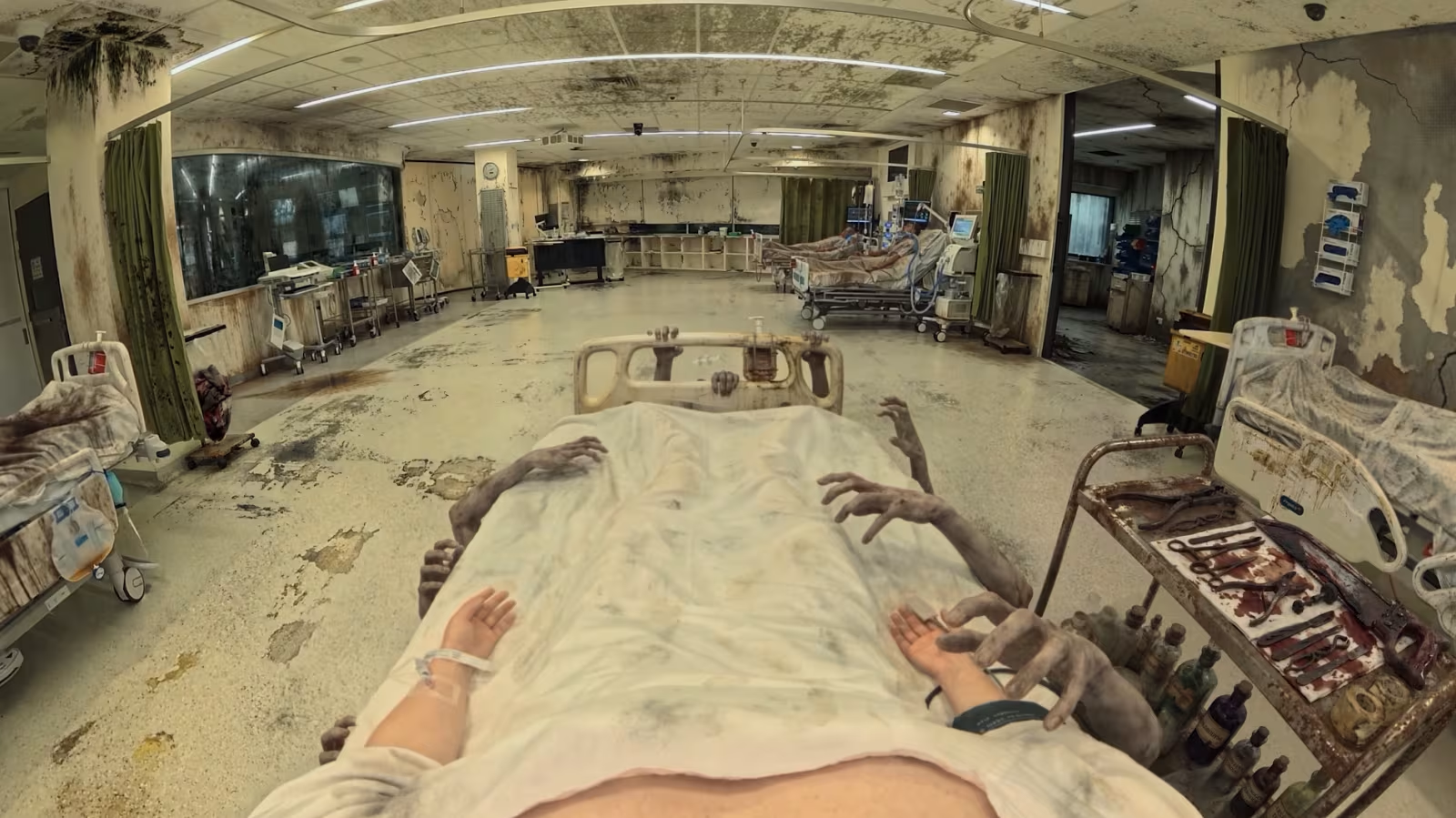
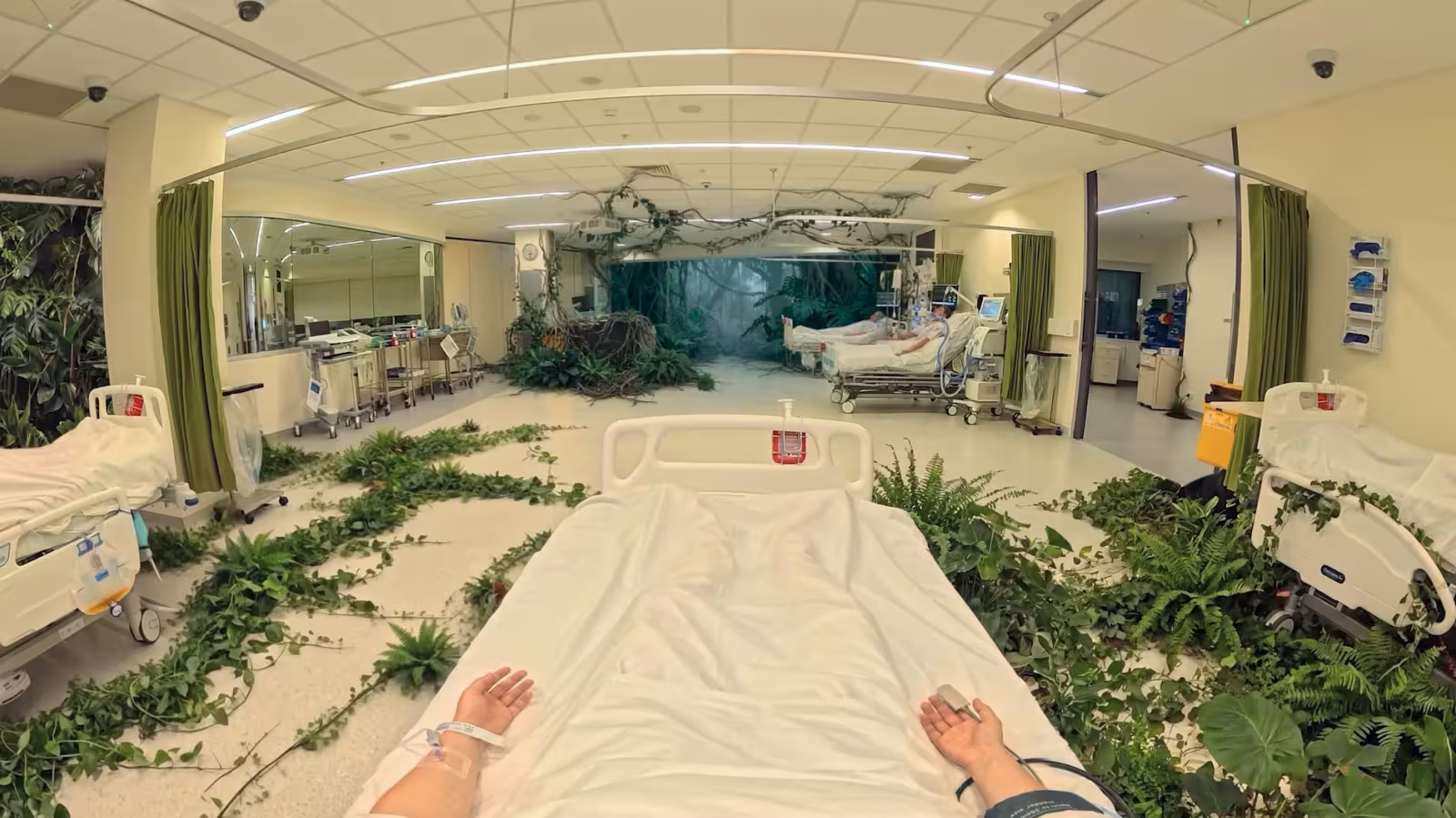
The self-contained VR delirium training program places the learner in a hospital bed, seeing through the patient’s eyes. At first, the hospital appears normal, with everyday activity going on around you. Then reality begins to shift. Live-action footage and AI-generated effects gradually transform the scene into an otherworldly state that represents delirium. The learner is free to explore each of the 3 scenarios as they please and the whole experience takes approximately 10-15 minutes.
The goal is for learners to feel the fear, confusion, paranoia, delusions and mistrust that patients with delirium experience, so they can pick up on signals, respond appropriately with empathy, and reduce the impact of these symptoms on already vulnerable patients.
Three scenarios. One patient’s mind.
- Waking up to anxiety & confusion: Familiar faces become unrecognisable, and strangers insist they are your family.
- Hypervigilance around being watched: You start to question the intentions of the staff caring for you as the hospital begins to decay
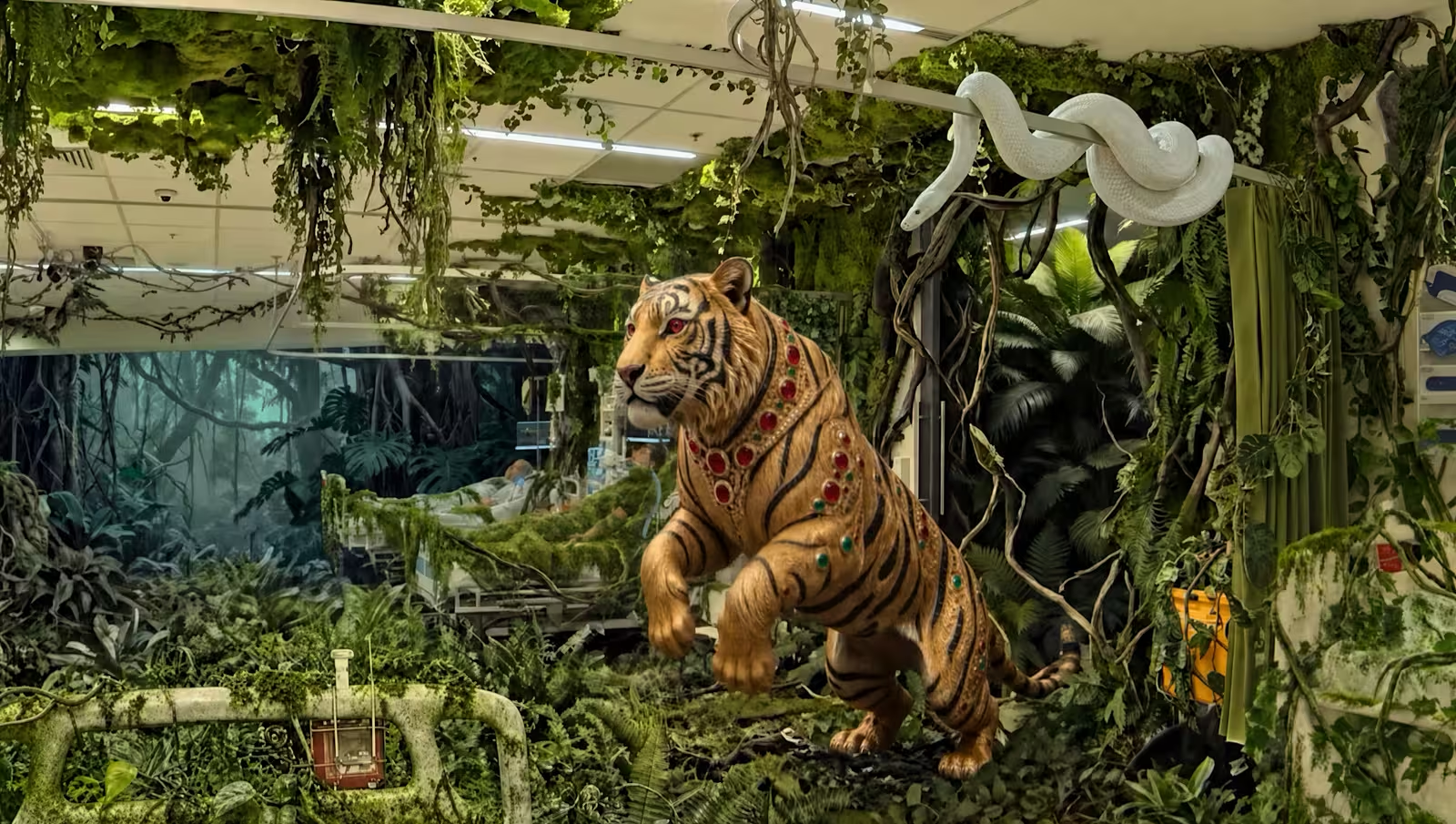
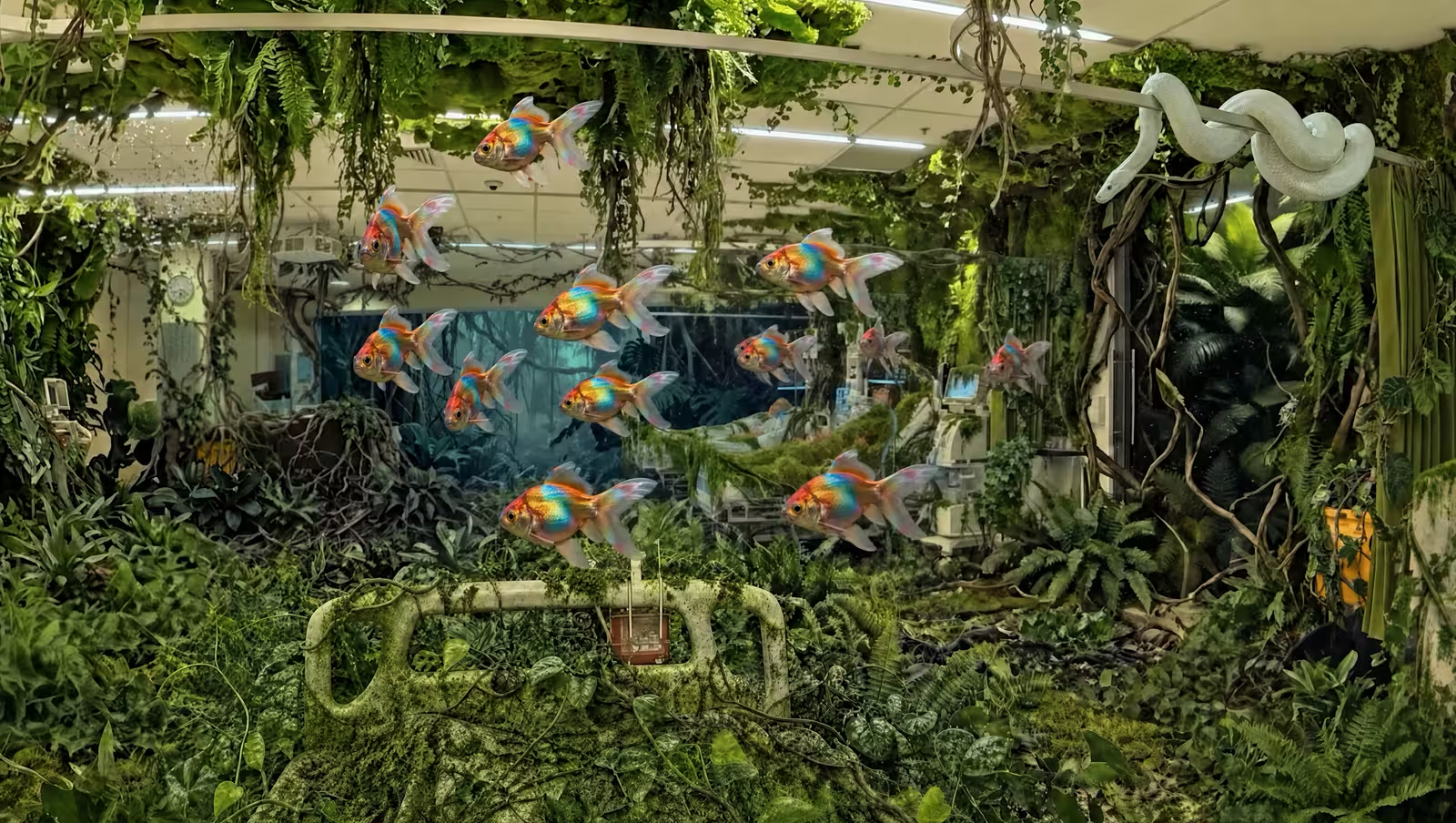
- Detachment from reality: The walls fall apart as vines and plants take over the room and hallucinations transform the hospital into a vivid jungle
[images]
Because delirium is such a personal experience, driven by imagination and emotion, AI was used to generate certain elements and exaggerate situations to re-create a state of mind reminiscent of delirium.
Process
Over several meetings, and a collaborative process spanning 3-4months, initial ideas were refined, final content agreed upon and the research project executed.
Before and after the delirium experience, the user is presented with a short survey assessing their knowledge and confidence on the subject. This gives UTS measurable data on the impact of the training.
By combining realism, dramatic techniques and interactive instructional design, the VR program recreates complex real-world situations, evoking connection through emotions and making learners active participants. It’s this emotional connection that makes such training memorable and builds confidence and practical knowledge without real-world risk.
Sources:
[1] Brennan et al., Aust. Crit. Care (2023)
[2] Palmer et al., JAMA Neurol. (2026)
[3] Witlox et al., JAMA (2010)
[4] Pezzullo et al., BMJ Open (2019)
Project Gallery
A closer look at how we brought this project to life — from concept to final experience.
Frequently Asked Questions
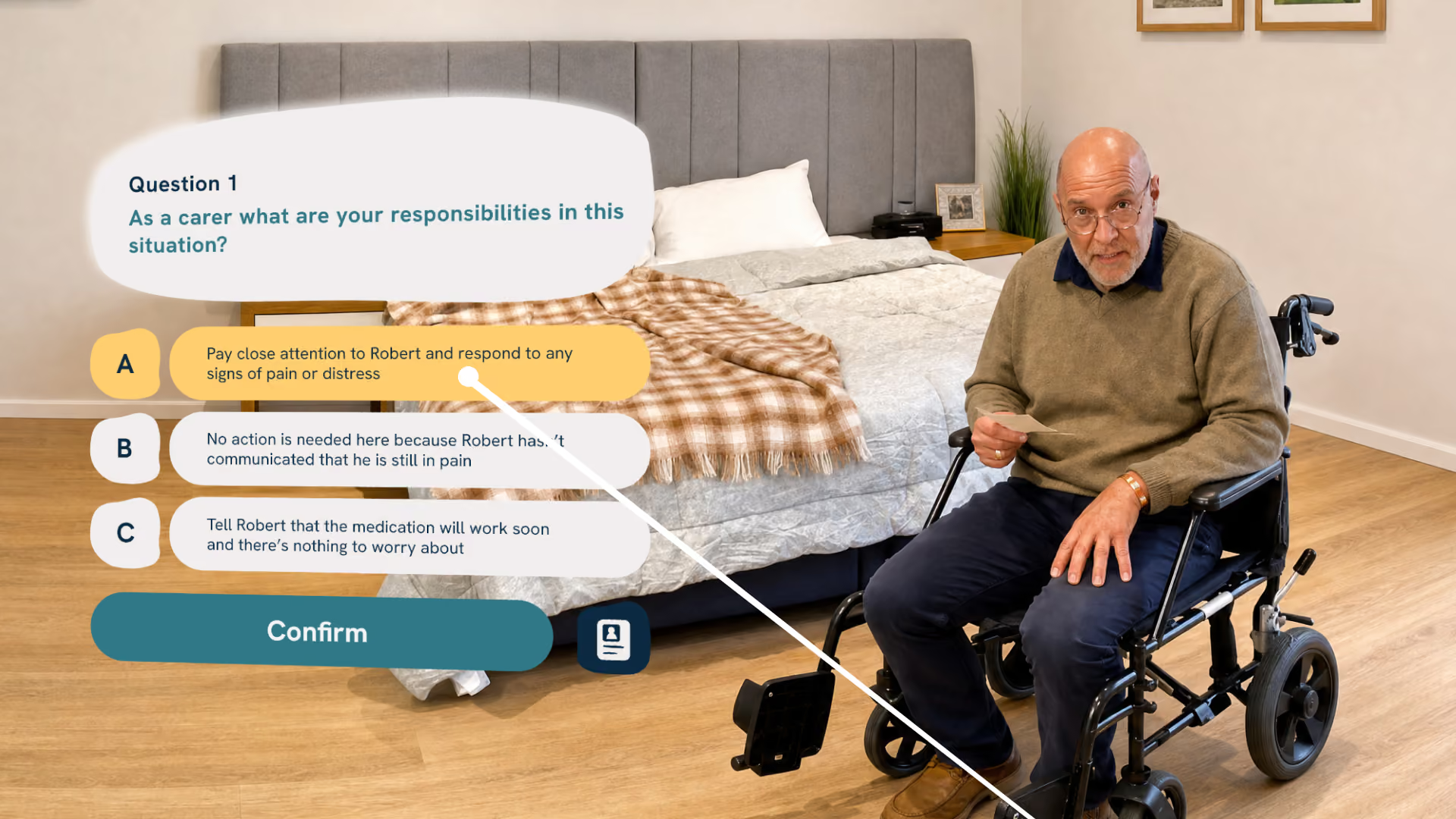
Delirium VR is an immersive training program that puts the learner in the place of a patient, in a hospital bed. Across three scenarios, you experience the confusion, fear and altered reality of delirium. The goal is for nurses and clinician to be able to recognise the signs sooner and respond appropriately, and with empathy.
Start Beyond worked directly with the UTS Faculty of Health and Dr Amy Montgomery’s team. Through a series of meetings to define and refine the details of the learning experience and outcomes, the Start Beyond studio team collaborated with the subject matter experts at UTS to determine the final content and the structure of the program as it is today. The program draws on the Delirium Clinical Care Standard so that it accurately represents the symptoms and stages of delirium.
The whole experience takes about 10–15 minutes, with each scenario running for 3–5 minutes. Learners can explore the scenarios in any order, and move about freely through the program.
Delirium is a deeply personal experience that varies from person to person. AI-generated elements made it possible to depict a distorted perception in ways standard footage could not, evoking the confusion, fear and mistrust that patients may feel.
Each of the three scenarios were shot in 360° video at the UTS campus, with UTS staff, equipment and facilities. AI-augmented imaging and spatial sound were added to add to the realism and visceral nature of the experience. The program runs on Pico VR headsets and is delivered through Oncio, Start Beyond’s proprietary immersive learning platform.
Following a successful trial with over 500 nursing students and clinicians at UTS, Delirium VR will be released in early 2027 for cancer and palliative care nurses at the Prince of Wales Hospital.
Delirium affects more than 30% of patients in intensive care and up to 50% of older adults in hospital. Older adults who experience delirium are also more than five times as likely to develop dementia, and more than twice as likely to die after discharge. Despite the high incidence of delirium in hospitals, it continues to go unnoticed.

Start Beyond is Australia's leading VR & AR immersive learning studio. Helmed by CEO Angus Stevens, the platform and studio teams work closely to develop memorable, scalable, and effective XR training solutions. Clients include Woolworths, St John Ambulance, CommBank, UTS, ANSTO, and Qantas.