I went to the biggest VR & AR industry event, to find out how many people are doing VR Training - and the numbers blew my mind.

For the past decade I’ve worked at Start Beyond. It’s my most favourite job. The team is brilliant and they’re nice people too. Thanks to our VR & AR expertise we consistently deliver exceptional results for our clients, and achieve our company vision; to transport imaginations and move people to see the world differently...
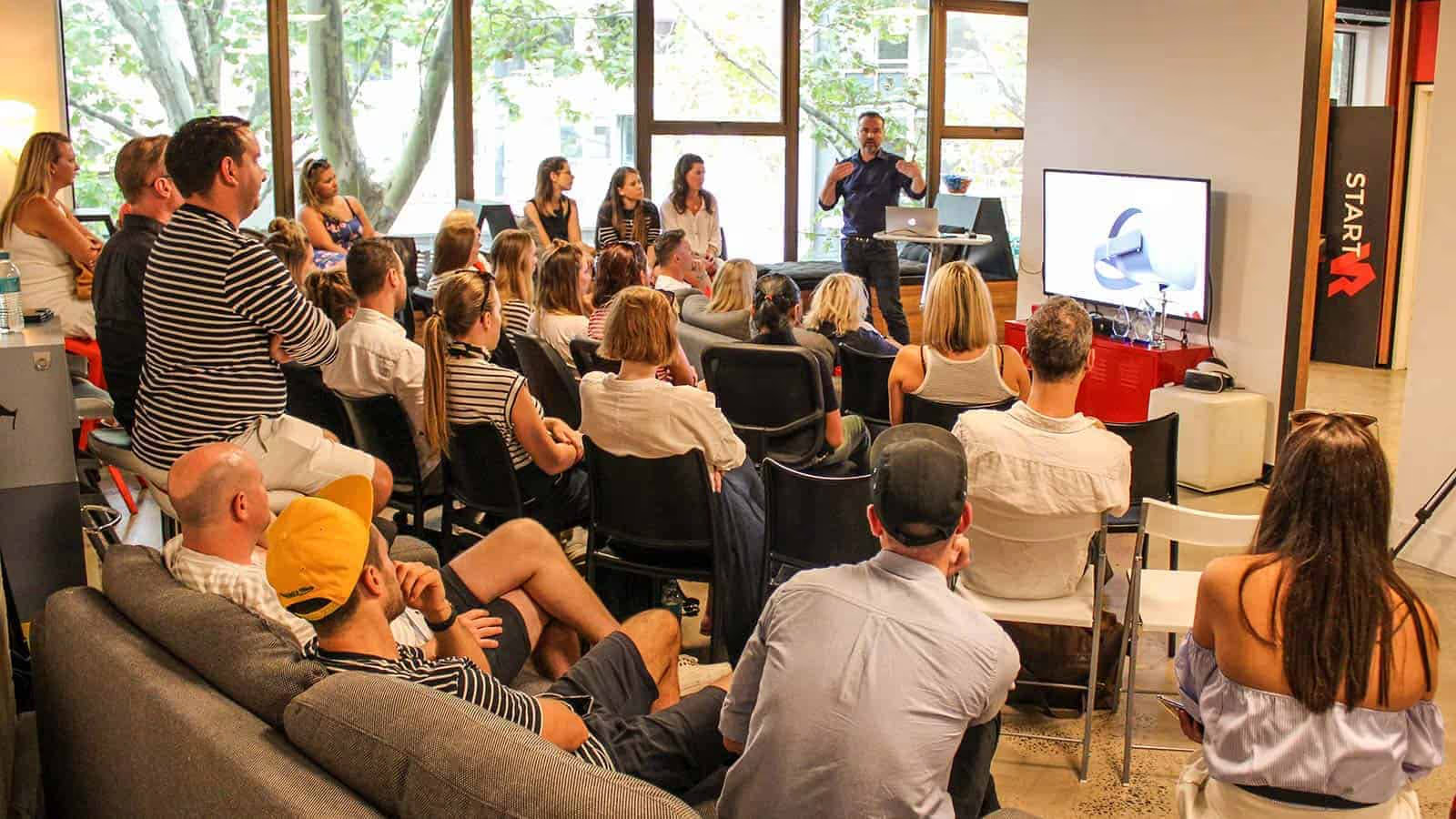
Lately I’ve been asked, “Faced with the AI and AR spatial glasses hype - where does VR sit?” Armed with this question I landed in the States to attend and speak at Augmented World Expo.
AWE has 3 events each year, Singapore, Brussels and Los Angeles, and there’s always a healthy tension between the song and dance of big tech showing off their latest products; operating alongside savvy and slightly grizzled, XR professionals, ie VR & AR combined, who have seen it all.
From Zuckerberg rebranding Facebook and in doing so ruining the word ‘meta’, forever; through to the latest wave of AI AR spatial glasses, which for my mind, remain a solution looking for a problem, AWE provides an international perspective on the current and future state of XR.
As a side note, you can’t have a VR / AR business thrive if you’re Pollyanna in your thinking and my views are based on hard-won industry expertise, combined with research gathered via our academic partners, 10 years of client feedback, and the analytics captured through our proprietary platform, Oncio.
And here is it is…
VR is undoubtably the most effective digital learning format.
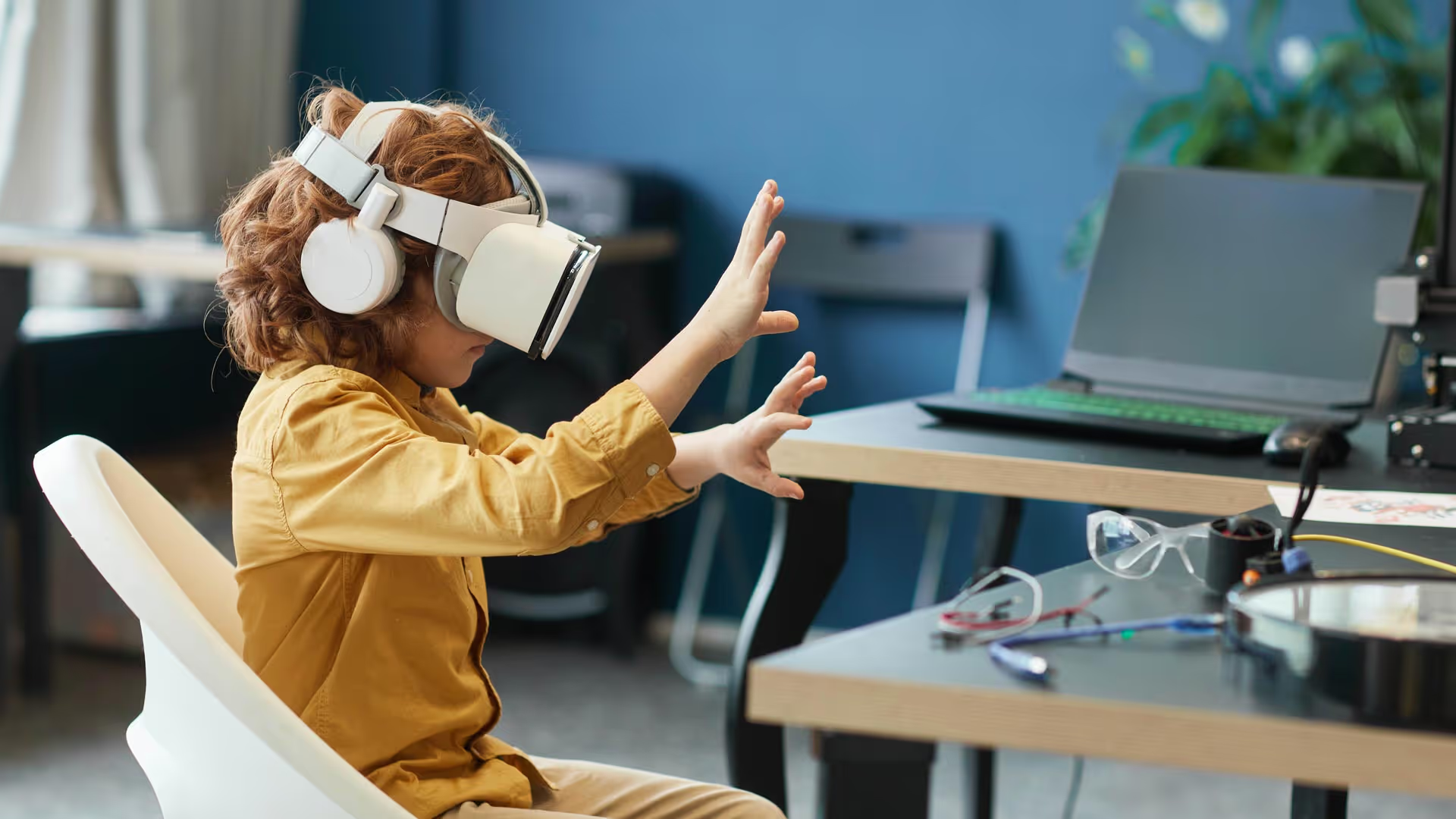
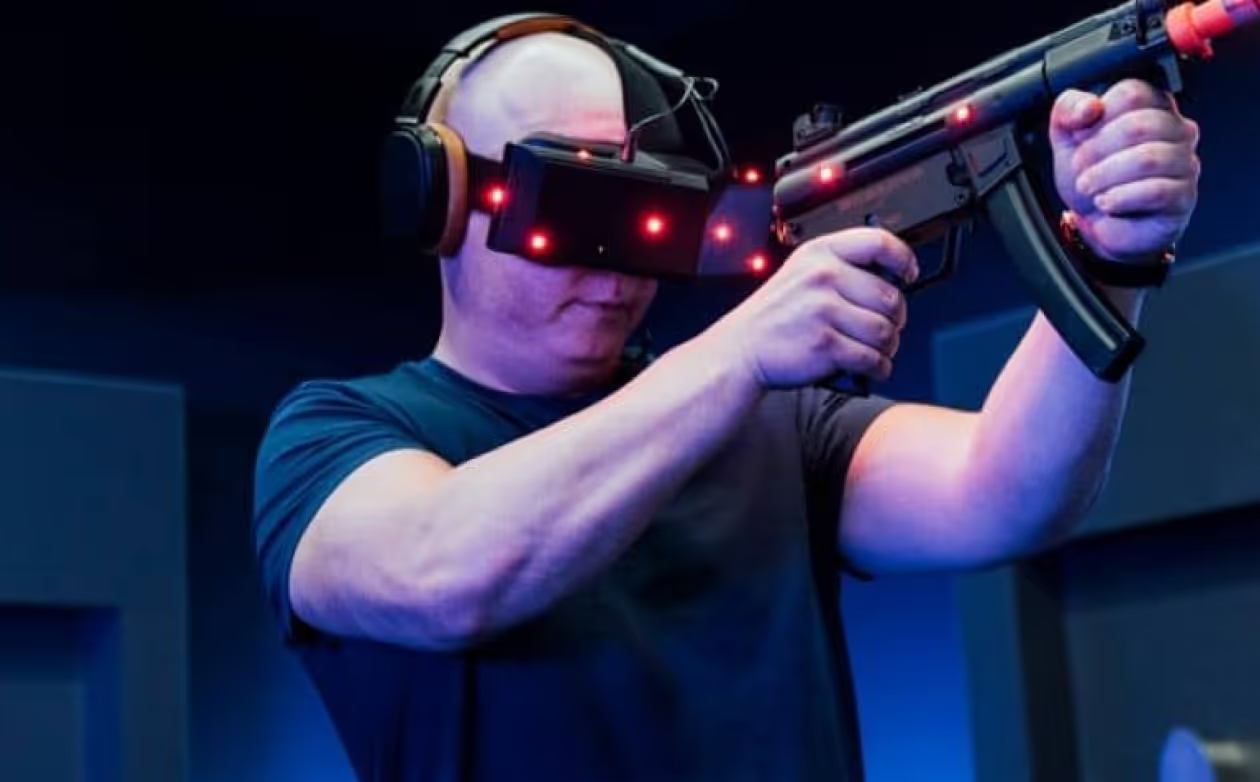
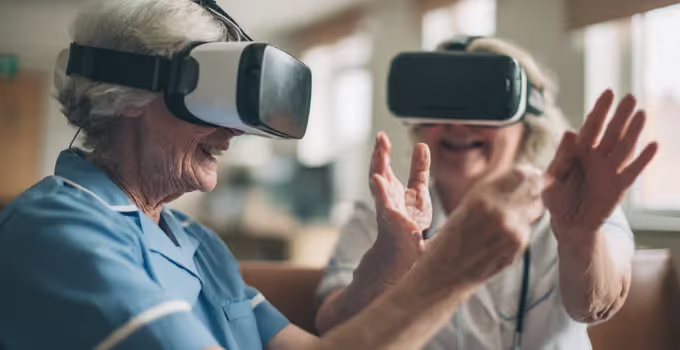
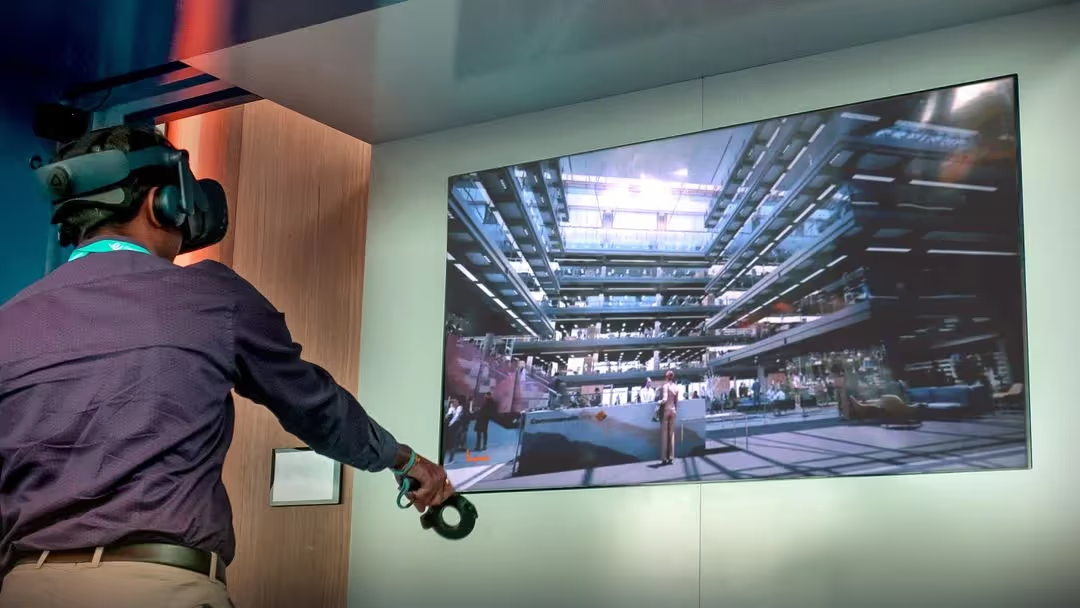
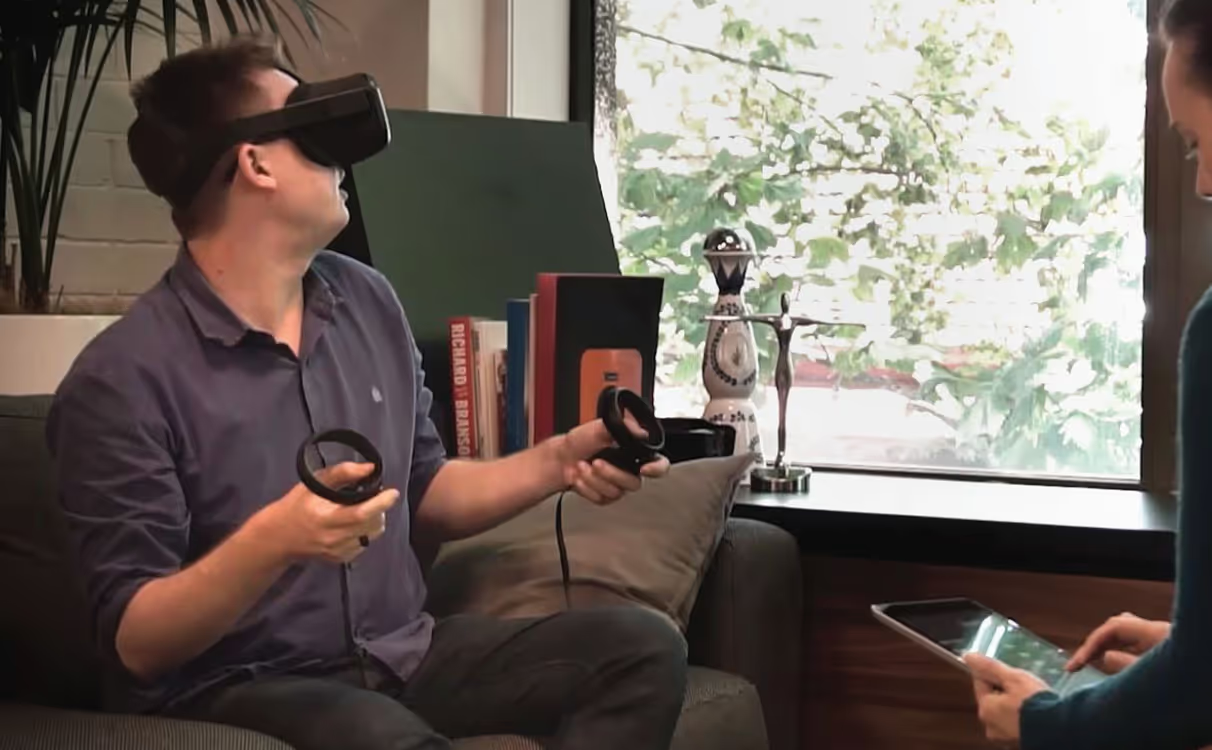
In a world of multiple screens where the attention economy is at a premium, in VR the learner is locked in. The headset demands your complete focus. It’s so intense 3 minutes feels like 10. And you can get a lot of information presented and retained in that time.
The reason VR didn’t reach the heights being heralded in 2021, was because consumers didn’t think the content was good enough. In the face of entertainment mediums that people know and love, such as film and gaming, VR couldn’t shift the dial.
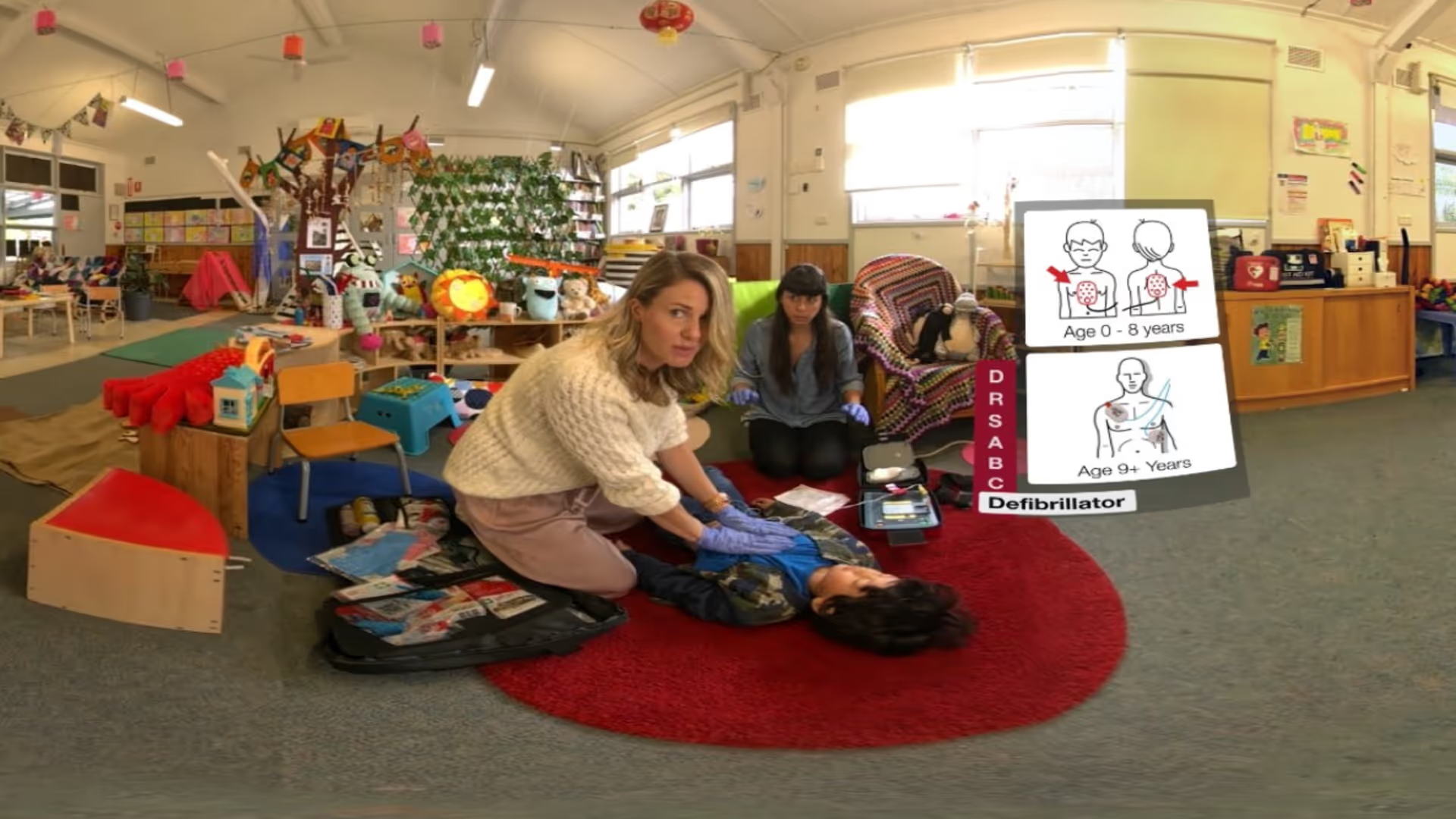
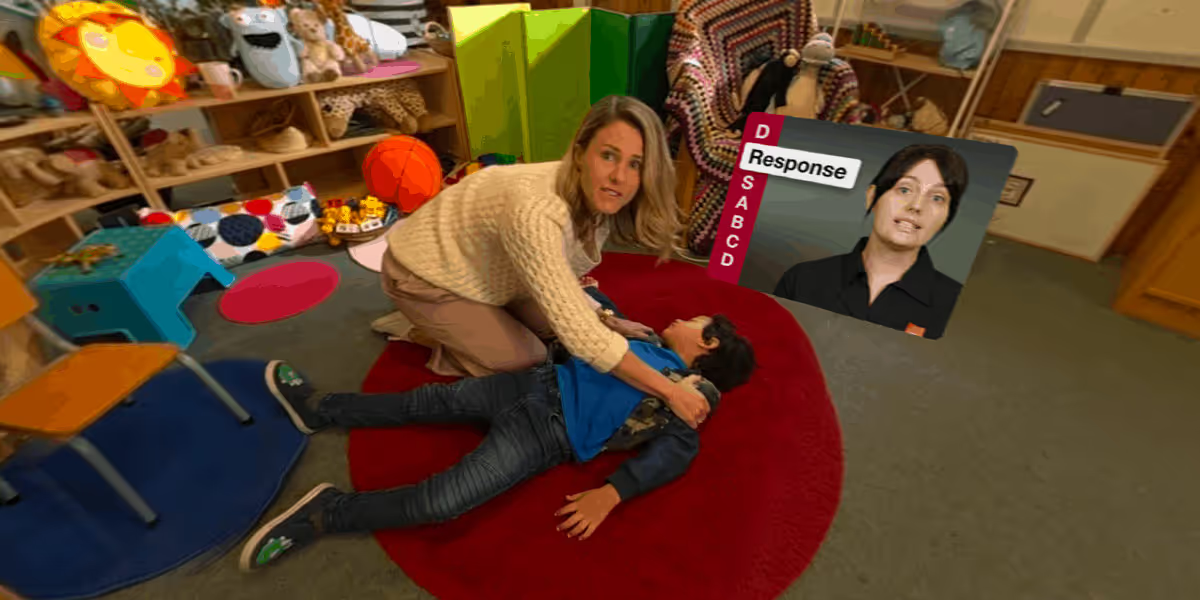
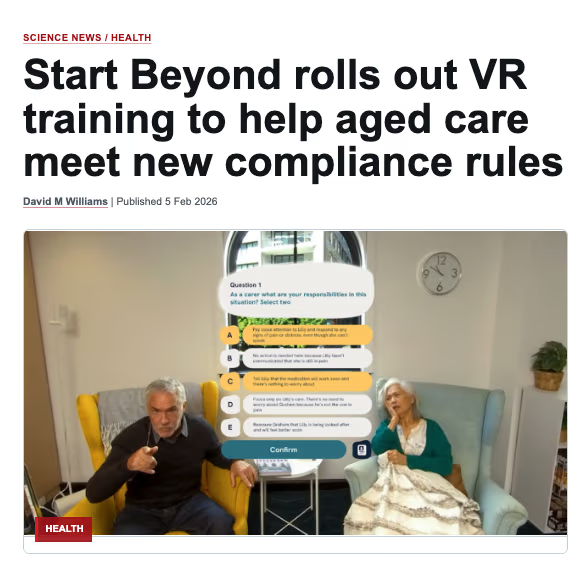
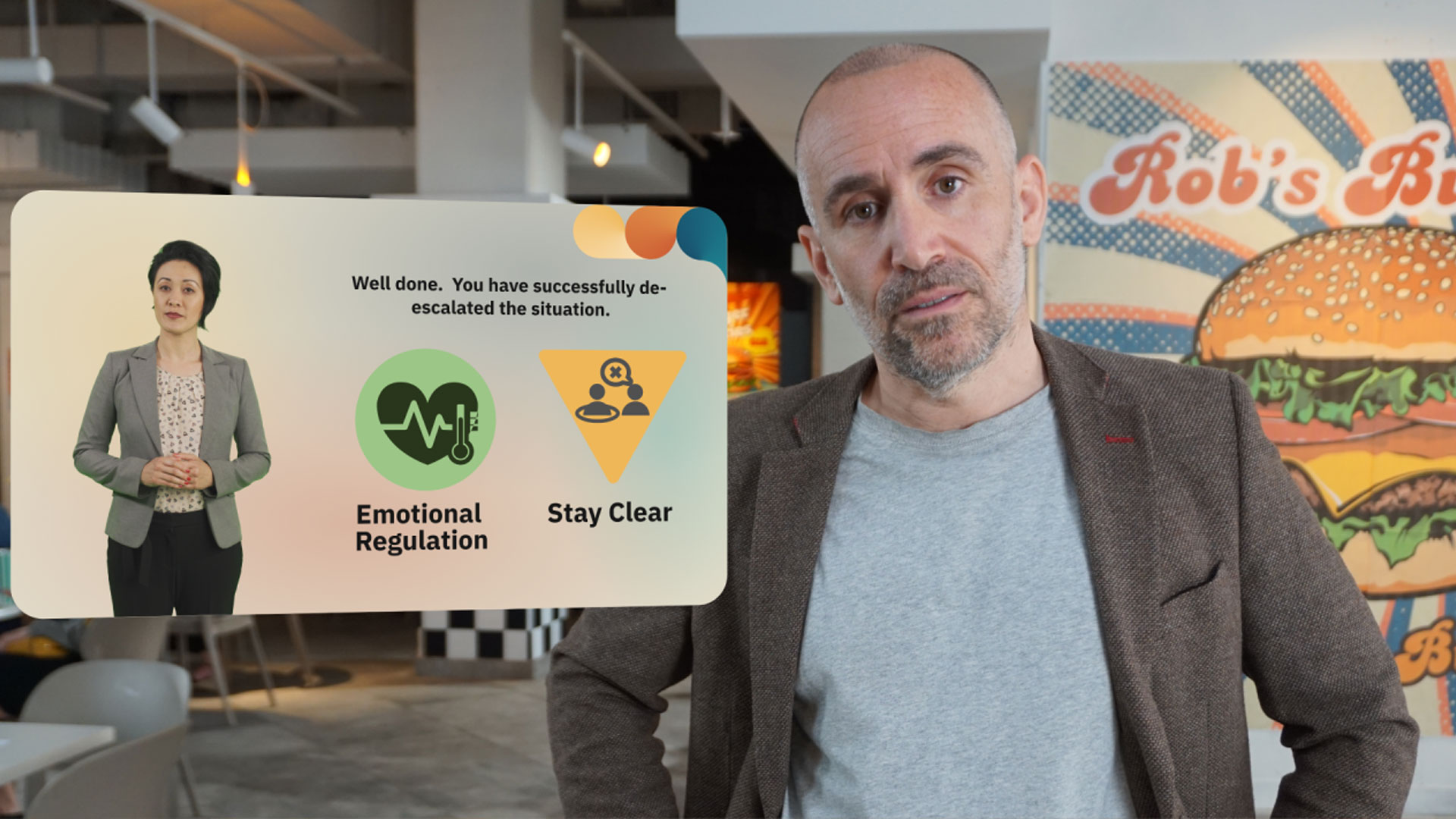
But within enterprise training - in a world of click ‘n flick compliance and endless 2D videos - the bar is so low, that VR shines brightly. It is entertaining. It is interactive. It places the learner inside the action, replicating scenarios of physical and emotional risk - without the real-world consequences.
VR lets people can learn through experience - without the heartache.
The philosophy behind every Start Beyond project is…“If you can get the learner to feel something, that emotion becomes a memory, and that memory becomes knowledge.”
VR elicits feelings. It builds confidence, generates speed to proficiency, and creates knowledge that sticks. In short, VR is the most effective digital learning format.
There are countless academic papers that confirm this, and every VR company has case studies highlighting training costs reduced and operational efficiencies unlocked, but what I wanted to know, as I landed in LAX was, does enterprise agree? And given the AI revolution, where does VR fit these days?
At AWE Los Angeles, in addition to the international case-studies presented, and conversations I had with other speakers and delegates, I also met with the suppliers that have visibility over large-scale deployment of VR headsets to enterprise and educational customers, globally. To each of these groups I asked, “Is VR training working? Are companies investing in it? And is the data of its effectiveness resulting in further investment?”
The answer was a resounding yes.
There are a handful of companies with over 30,000 headsets being used to train their workforce. Followed by a range of businesses deploying over 10,000 units, then a large sector operating in the 1,000 plus range, and then the most populated, which is the 10 to 1,000 group.
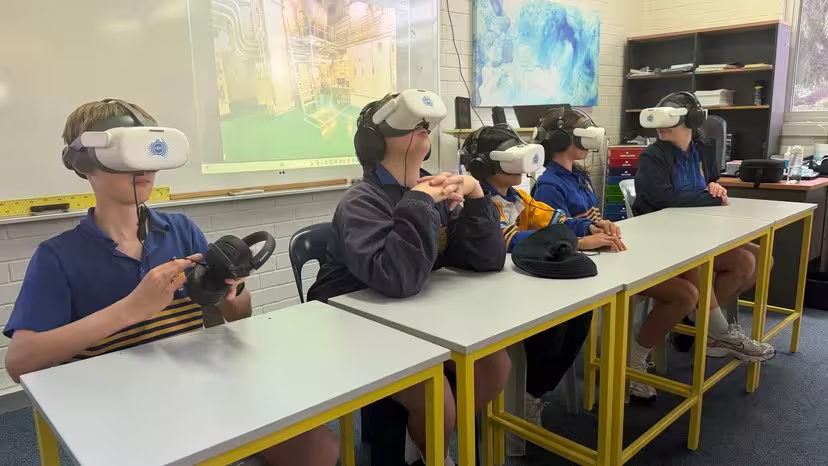
Within the education sector, from schools ‘K to 12’, through to vocational colleges and universities, the numbers are even bigger. In fact, there more learning-based organisations globally using VR to deliver their programs than in enterprise; including one educational company that’s currently deploying over 200,000 headsets.
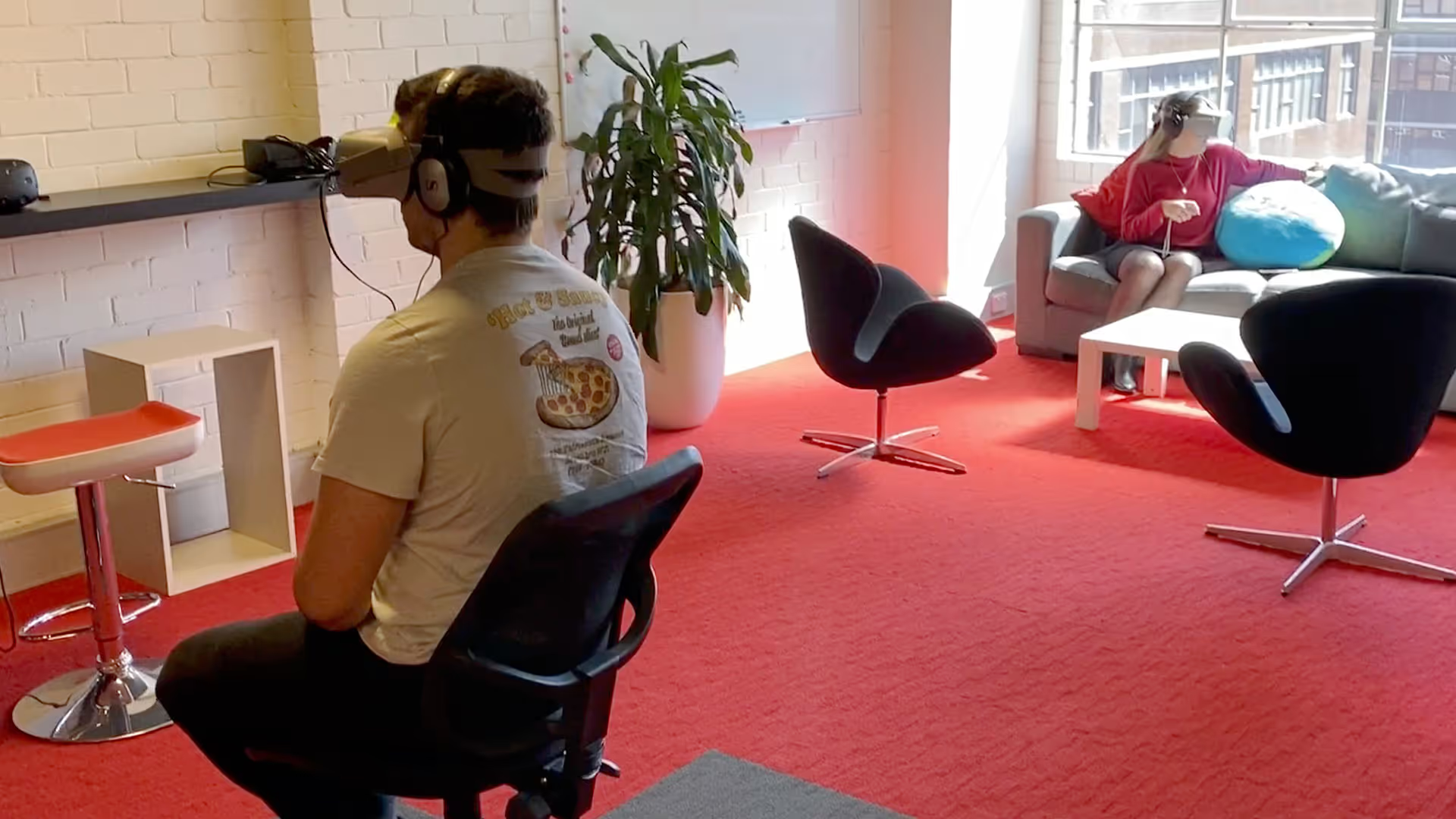
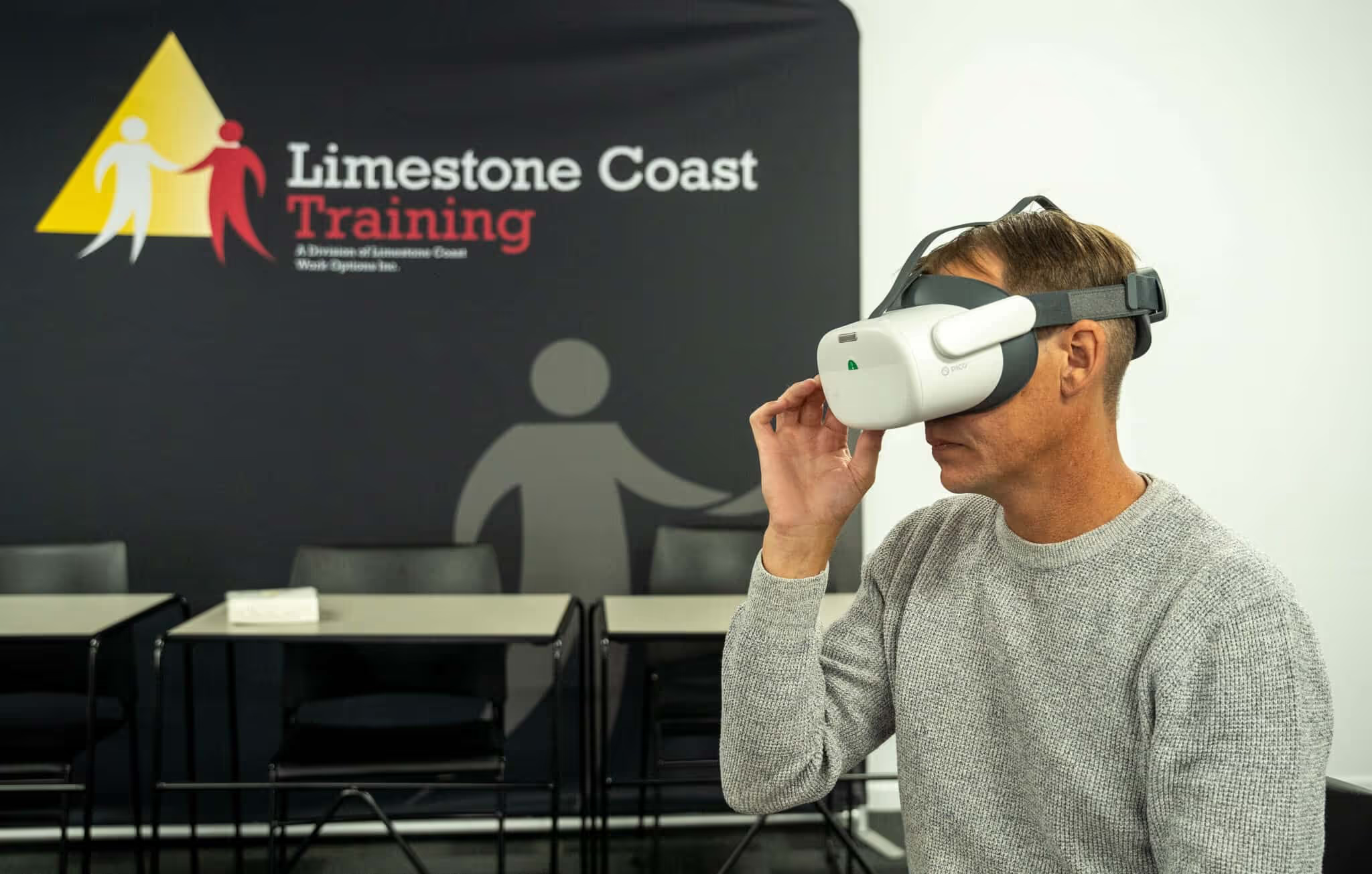
The thing is, you don’t need that many headsets to deliver training to thousands of people, and there is no limit to how many people can use a single headset – so the scale of how much VR training is being delivered around the world is enormous.
Many of our clients with just ten headsets have delivered over 5,000 VR experiences in two years or less, and with focused campaigns it can be even more. ANSTO, for example, over the course of a 3-day expo using only 20 headsets had more than 2,500 people complete their VR program.
So imagine if you’ve got over 30,000 VR units being deployed across your organisation how many people can complete their training in VR?
Respectful of commercial arrangements I’ve used a selection of publicly available client logos, to create the summary slide. I’ll leave it to you to speculate over which companies are using the most headsets. Plus, to give it a local flavour, I’ve included some of Start Beyond’s Australian clients.
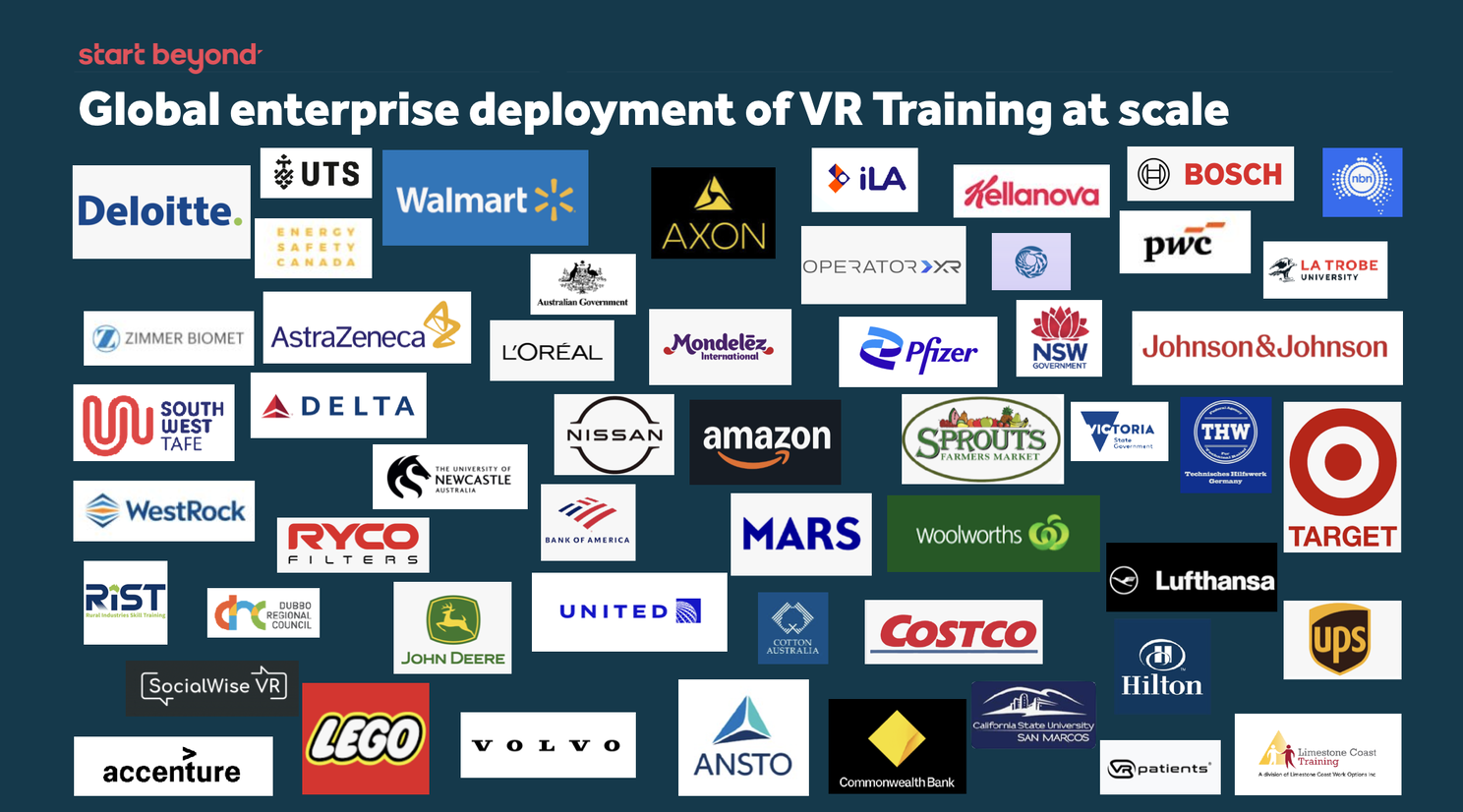
Businesses globally, have recognised the value of VR, and through their on-going investment, have validated the statement, “VR is the most effective digital learning format”. VR training has hit a new level of maturity and with more organisations now seeing the commercial impact of VR to deliver unforgettable learning at scale, this growth will continue.
To those of you thinking, “How do I get VR training happening at my work?” the topic of my next newsletter, “The 5 Golden Rules to delivering Triumphant Immersive Learning”, will answer this question.
Thank you for taking the time to read this all the way to the end. I hope you’ve found it helpful. Now reward yourself and go grab a biscuit. Get me one too please, choc chip and packed with gluten.

Angus Stevens is the CEO and Co-Founder of Start Beyond, Australia's award-winning VR & AR studio, and has spent over a decade producing immersive experiences and XR training solutions through spatial design and innovation. An international speaker and thought leader, he's an active voice on LinkedIn.

AR & VR training provides learners with knowledge that sticks. It is cheaper and more memorable than traditional 2D methods.
Contact us for a demonstration of how AR and VR learning simulations can reduce costs, increase knowledge retention, and build high performing teams.





.avif)








.avif)